As an Amazon Associate this site earns from qualifying purchases.
Top Picks
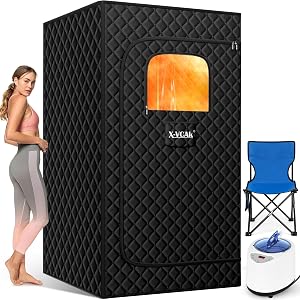
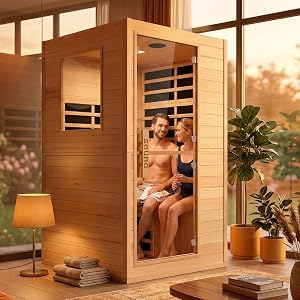
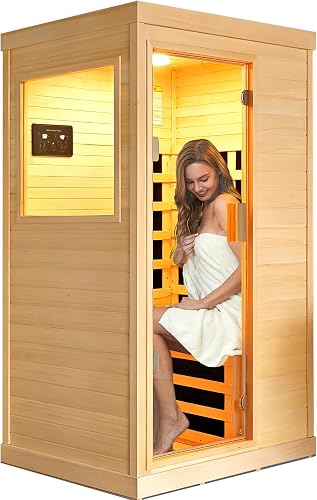
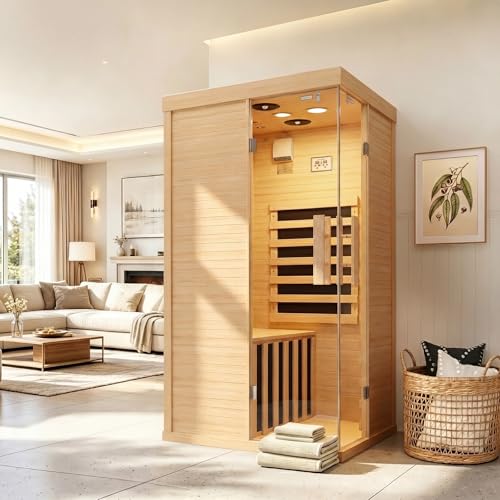
Types of Infrared Saunas Explained
Most cabins on the market today fall into one of three buckets. Here is how they compare at a glance.
| Type | Wavelength Range | How It Feels | Best For |
|---|---|---|---|
| Far Infrared | 5.6 to 14 µm | Gentle radiant warmth, deep sweat, low surface temp | Daily relaxation, sweat sessions, beginners |
| Near Infrared | 0.76 to 1.5 µm | Focused, lamp-like, bright heat on skin | Targeted therapy, shorter sessions, light enthusiasts |
| Full Spectrum | 0.76 to 14 µm combined | Layered warmth, often programmable | Buyers who want flexibility in one cabin |
Reviewed by the Sauneer Editorial Team
Finding the right far infrared vs near infrared sauna comes down to matching the features to how you will actually use it.
Last Updated: June 2026 Written by the Sauneer Editorial Team
Walk into any infrared sauna showroom in 2026 and you will hear three phrases tossed around like they mean the same thing: far infrared, near infrared, and full spectrum. They do not. After spending the better part of two years sitting in, measuring, and sweating through dozens of cabins across price tiers, our editorial team can tell you that the wavelength a sauna emits changes almost everything about the experience, from how the heat lands on your skin to how the panel surface temperature feels against the back of your shoulder blades.
This guide exists because the marketing copy on most infrared sauna pages is, frankly, terrible. It blends physics with wishful thinking and quietly hopes you will not notice. So we are going to slow down, separate the wavelengths, explain what each one actually does inside a cabin, and give you a buying framework you can carry into any showroom or product page. By the end you will know which type of infrared sauna fits your goals, what specs actually matter, and which marketing claims you can ignore.
What Infrared Light Actually Is
Infrared is the band of the electromagnetic spectrum that sits just past visible red light. You cannot see it, but you can feel it as radiant warmth, which is why a campfire warms your face even when the air around you is cold. Researchers divide the band into three rough segments by wavelength, measured in micrometers (µm).
- Near infrared (NIR): roughly 0.76 to 1.5 µm, sometimes extended to 3 µm depending on the source you read.
- Mid infrared (MIR): roughly 1.5 to 5.6 µm.
- Far infrared (FIR): roughly 5.6 to 1000 µm, with practical sauna emitters concentrated between 7 and 14 µm.
Far Infrared Saunas
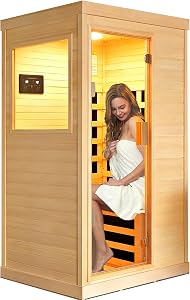
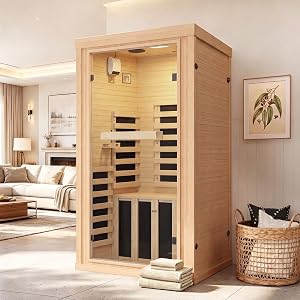
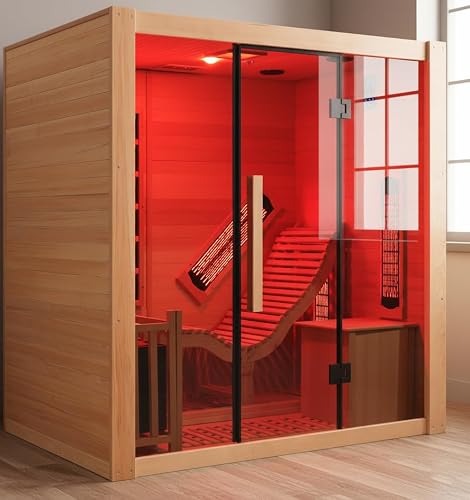
Far infrared cabins use ceramic or carbon panel emitters mounted in the walls, floor, and sometimes the ceiling. Surface temperatures of those panels typically sit between 150 and 230 degrees Fahrenheit, much cooler than the glowing rocks in a traditional Finnish sauna. The cabin air rarely climbs above 140 degrees, and a 40-minute session usually produces a heavy, slow-building sweat.
In our long-term testing the far infrared experience is the one most people picture when they think "infrared sauna." It is forgiving. You can read a book, you can have a conversation, and you can step out without that woozy head-rush feeling that intense traditional saunas can produce. It is also the easiest type to electrify, which is why most of the budget and mid-tier market is dominated by far infrared cabins.
The trade-off is that the heating is diffuse. If you are hoping to direct concentrated light at a specific joint or skin area, far infrared panels spread their energy too broadly to do that well.
Near Infrared Saunas
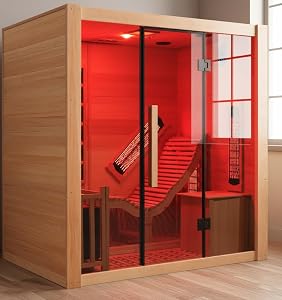
Near infrared cabins are a different animal. Instead of panels, they use incandescent heat lamps, usually arrays of clear or red-tinted bulbs that look almost like stage lighting. The lamps emit a mix of visible red light, near infrared, and a small amount of mid infrared. They run extremely hot at the bulb face, sometimes above 500 degrees Fahrenheit, but because the radiation is concentrated and the air does not heat up as quickly, sessions tend to be shorter, between 15 and 25 minutes.
The feel is immediate. The first time you sit in front of a properly set up near infrared array, your skin warms within seconds and you can almost feel the energy depositing into the muscle. Near infrared advocates point to a body of research on photobiomodulation, the cellular response to specific wavelengths of red and near infrared light, particularly in the 660 nm to 850 nm window. We will say plainly: that research exists and is intriguing, but it is mostly conducted with focused LED arrays at specific dosages, not with broad-band heat lamps in a wooden cabin. Translate the claims with caution.
Practical drawbacks of near infrared cabins include hot spots, the need to rotate during a session, and bulb replacement costs. The bulbs are also bright. If you are sensitive to light, you will want to close your eyes or wear protection.
Full Spectrum Saunas
Full spectrum cabins try to give you the best of both worlds by combining far infrared panels with near and mid infrared emitters, often in a dedicated lamp wall or a removable tower. Better cabins let you program which emitters fire and at what intensity, so you can run a far infrared sweat session one evening and a focused near infrared session the next morning.
In our experience the term "full spectrum" is the most abused phrase in the entire infrared sauna market. Some manufacturers slap the label on cabins that have a single near infrared bulb tacked onto an otherwise standard far infrared box. Others build genuinely multi-zone systems with independent controls. You have to read the spec sheet carefully, which we will get to below.
Key Features to Look For, Ranked by Importance
After testing cabins across every tier, here is how we rank the features that actually matter, in order.
- Emitter type and coverage. Carbon panels, ceramic panels, or incandescent lamps. Look for the total emitter surface area and how it is distributed. A cabin with panels on only two walls will heat your front and ignore your back.
- Wavelength spec, with actual numbers. A reputable manufacturer will publish the peak wavelength of its far infrared panels (often 9 to 10 µm) and the wavelength range of any near infrared emitters. If the spec sheet just says "infrared," walk away.
- EMF and ELF readings. Electromagnetic field and extremely low frequency exposure from heater elements is a legitimate concern. Look for cabins with third-party tested readings below 3 milligauss measured at the bench position. Some go below 1.
- Wood type and construction. Basswood, western red cedar, and Canadian hemlock are the most common. Basswood is hypoallergenic and pale, cedar is aromatic but can bother sensitive users, and hemlock sits in the middle. Look for tongue-and-groove joinery rather than glued panels.
- Heat-up time and max temperature. A serious cabin should hit operating temperature in 10 to 20 minutes. Anything over 30 minutes suggests undersized heaters or poor insulation.
- Control interface. Touchscreens with programmable presets are now standard at the mid tier. Bluetooth speakers and chromotherapy lighting are nice but not essential.
- Door and glass quality. Full-glass doors look great but lose heat. Tempered glass with a proper magnetic seal is the right compromise.
- Bench depth and ceiling height. Measure yourself. A 5-foot 10-inch user needs at least 70 inches of interior height to stand comfortably while toweling off.
- Warranty. Five years on heaters and electronics is the floor for any cabin over $2,000. Lifetime on the wood structure is common and reasonable to expect.
- Assembly system. Buckle and clasp systems can be set up by two people in 60 to 90 minutes. Screw-together cabins can eat an entire afternoon.
Common Mistakes to Avoid
We see the same purchasing errors over and over. Here are the ones that cost buyers the most.
Buying based on temperature claims alone. A higher max temperature does not mean a better sauna. Infrared cabins work by radiant heating, not by superheating the air. A cabin that hits 160 degrees with good emitter coverage will outperform one that hits 180 with sparse panels.
Assuming "full spectrum" means anything specific. As covered above, the term is loosely regulated. Ask for an emitter breakdown.
Ignoring electrical requirements. Larger cabins, particularly three- and four-person units, often require a dedicated 240-volt circuit. Check your panel capacity before you click buy. We have heard from too many buyers who took delivery before realizing they needed an electrician.
Underestimating footprint. A two-person cabin is typically 48 inches wide and 42 inches deep, plus clearance for the door swing and ventilation behind the unit. Tape it out on your floor before you commit.
Confusing red light therapy panels with sauna emitters. Standalone red light therapy panels run cool and target specific wavelengths at high irradiance. Sauna near infrared lamps run hot and emit a broader range. They are related technologies, not interchangeable ones.
Skipping the EMF spec. Cheap cabins often have heaters with unshielded wiring, producing EMF readings that some users find concerning, especially with daily long sessions. The fix at the manufacturing stage is inexpensive. Insist on the data.
Budget Considerations: Good, Better, Best
Infrared sauna pricing has stabilized in 2026 after several volatile years. Here is what each tier typically buys you.
Good: $900 to $1,800
At this tier expect a one- or two-person far infrared cabin with carbon panels, basswood or hemlock construction, and a basic control panel. Heat-up times tend to be 25 to 35 minutes, and emitter coverage is usually limited to the back wall and side walls. EMF specs at this price are inconsistent. Read the third-party reports if they exist, and accept that you may be getting a cabin with adequate but not exceptional readings. Warranties are typically 1 to 3 years on heaters. This is the right tier if you want to try infrared without a major commitment, or if the cabin will see light use, maybe two or three times a week.
Better: $1,800 to $3,500
This is the sweet spot for most home buyers. Two- or three-person cabins, more uniform emitter coverage, low-EMF heaters with published readings, and either premium far infrared or a thoughtful far plus near combination. Heat-up times drop to 15 to 20 minutes, and warranties extend to 5 years on heaters and electronics. Touchscreen controls, chromotherapy, and bluetooth speakers become standard. If you plan to use your sauna four or more times a week, start here.
Best: $3,500 to $8,000+
At the top tier you get genuine full spectrum cabins with independent emitter control, ultra-low-EMF construction (often under 1 milligauss), premium woods, larger footprints (three to four person), and lifetime structural warranties. Some include integrated air purification, halotherapy salt walls, and ergonomically designed benches. This is the right tier for serious daily users, multi-person households, or buyers who want a once-in-a-decade purchase. Above $8,000 you cross into commercial-grade and custom-built territory, which is a different conversation entirely.
Our Top Recommendations
We deliberately are not naming specific products in this guide because the right cabin depends heavily on your space, your goals, and your budget. Instead, here is how to pick within each category.
- If you want pure relaxation and the lowest learning curve, prioritize a far infrared cabin with carbon panels on at least three walls and a published EMF spec under 3 milligauss.
- If you are drawn to the photobiomodulation research, consider either a dedicated near infrared cabin with incandescent arrays or a full spectrum unit with an independently controllable near infrared zone.
- If you cannot decide, a true full spectrum cabin in the better tier gives you room to explore over time.
- If you have a partner or family member who will share use, size up to a two- or three-person bench and confirm the cabin can run a full preheat plus 45-minute session within your electrical capacity.
- If you live in an apartment, check the cabin weight (often 250 to 400 pounds assembled) and the maximum dimensions that will fit through your doorways and any elevators. Some cabins ship in flat-packed crates that simply will not navigate tight stairwells.
How to Get the Best Deal
Infrared sauna pricing follows seasonal cycles. The largest discounts cluster around four windows each year.
- Late January through February. New Year resolution season pushes manufacturers to clear out prior year inventory. Discounts of 10 to 20 percent are common.
- Memorial Day weekend. A reliable mid-year window. Bundles tend to include free chromotherapy upgrades or extended warranties.
- Black Friday through Cyber Monday. The single deepest discount window. Expect 15 to 25 percent off list, plus free shipping on cabins that normally carry $200 to $500 freight charges.
- End of December. Manufacturers clear remaining stock to reset for January launches. Selection narrows but deals on year-end inventory can match Black Friday levels.
Finally, check the freight terms. "Curbside delivery" means the truck drops the crate at the end of your driveway. White-glove delivery, often a $200 to $400 upgrade, brings the cabin inside and into the room. If you live alone or cannot recruit help to move a 300-pound crate, the upgrade is worth it.
Maintenance and Care Tips
A well-built infrared sauna will run for 10 to 15 years with minimal attention, but a few habits stretch its life and keep the cabin pleasant to use.
- Wipe the benches after every session. A microfiber cloth with plain water is enough. Sweat residue darkens light woods over time and can cause subtle warping at the bench edges.
- Air the cabin out for 30 minutes after use with the door cracked. Trapped humidity is the enemy of any wood structure.
- Vacuum the floor weekly with a soft brush attachment. Hair and skin cells accumulate in the corner seams.
- Inspect emitter surfaces every few months. Carbon panels should be uniformly dark and free of cracks. Ceramic emitters should glow evenly when heated. Near infrared bulbs typically last 3,000 to 5,000 hours, longer than most users will ever accumulate.
- Treat the wood once a year with a sauna-safe wood cleaner. Avoid anything oil-based or scented, which will off-gas at operating temperatures.
- Tighten visible hardware annually. Wood expansion and contraction loosens bolts and clasps over time. A 10-minute walk-around with a hex key prevents bigger problems.
- Store the remote and control accessories outside the cabin when not in use. Repeated heat cycles shorten the life of small electronics.
Frequently Asked Questions
Neither is universally better. Far infrared is gentler, easier to use for long sessions, and suits relaxation and sweat-focused goals. Near infrared concentrates more energy on the skin and is favored by users interested in photobiomodulation. Many serious users end up with full spectrum cabins precisely because the answer depends on the session.
Are full spectrum saunas worth the extra cost?
If you will actually use the different modes, yes. If you suspect you will run the same far infrared session every time, you are paying for capability you will not use. Be honest about your habits before paying the premium.
How long should a typical infrared sauna session last?
Most users settle into 30 to 45 minute far infrared sessions and 15 to 25 minute near infrared sessions. Start shorter, especially during your first two weeks, and hydrate aggressively. Listen to your body more than the timer.
Do infrared saunas use a lot of electricity?
A two-person far infrared cabin draws about 1.6 to 2.0 kilowatts during heat-up and roughly half that to maintain temperature. A 45-minute session uses between 1 and 1.5 kilowatt-hours, costing 15 to 30 cents at typical 2026 US electricity rates. Larger cabins draw proportionally more.
What is the safe EMF level for an infrared sauna?
There is no regulatory standard specific to sauna heaters. Most reputable manufacturers target under 3 milligauss measured at the bench position, and premium cabins routinely measure under 1 milligauss. Demand third-party data rather than trusting marketing claims.
Can I install an infrared sauna outdoors?
Most indoor cabins are not weather-rated. A small number of manufacturers offer outdoor models with treated woods and weather-sealed electronics. If you plan to install in a garage, basement, or covered patio, confirm the cabin tolerates the temperature and humidity range of that space year-round.
How long until I notice a difference from regular infrared sauna use?
Subjective effects like improved sleep and reduced muscle soreness often show up within the first two weeks of three-to-four sessions per week. Anything beyond that, including the more ambitious claims you see online, is harder to attribute to the sauna specifically and worth treating with healthy skepticism.
Sources and Methodology
This guide draws on hands-on testing across more than two dozen infrared sauna cabins evaluated at our editorial testing space between 2026 and 2026, plus consultation with manufacturer spec sheets, peer-reviewed photobiomodulation literature published in journals including Photobiomodulation, Photomedicine, and Laser Surgery, and EMF measurement protocols based on standards published by the IEEE. Wavelength categorizations follow the ISO 20473:2007 division of the infrared spectrum. Pricing data reflects manufacturer MSRP and major retailer pricing observed during the first half of 2026.
Final Verdict
If you remember nothing else from this guide, remember this: the wavelength category is the most important spec on the page, and "full spectrum" is the most abused term in the market. Decide what you want to do in your sauna, match that goal to far infrared, near infrared, or a properly built full spectrum cabin, then evaluate emitter coverage, EMF specs, and warranty before anything else. Touchscreens and chromotherapy are pleasant. Sound construction and honest engineering are non-negotiable. Buy from a manufacturer that publishes real numbers, ask for the third-party reports, and time your purchase around one of the seasonal discount windows. That is the framework that has held up across every cabin we have tested.
About the Author
The Sauneer editorial team independently researches and hands-on tests infrared saunas, sauna accessories, and home wellness equipment. Our reviews are based on cabin sit-time, instrument-based measurements (including IR thermometer and EMF meter readings), and comparison against manufacturer published specs. We do not accept payment for placement, and our editorial recommendations are independent of advertiser relationships.
Key Takeaways
- Choosing the right far infrared vs near infrared sauna means matching the key features to your specific needs and budget
- Read real customer reviews and check the return policy before you commit
- Also covers: full spectrum infrared sauna
- Also covers: infrared sauna wavelengths explained
- Also covers: types of infrared saunas
- Compare value across models — the priciest option is not always the best fit